“Wolf, wolf, wolf, wolf, and then a line in a different hand that says a thing out of the north carr, taken at the ninth bench, and a description that runs to four lines. I have twelve such lines in a book of six hundred entries and they are the only twelve worth anything.”
As the bounty men of the northern march tell it
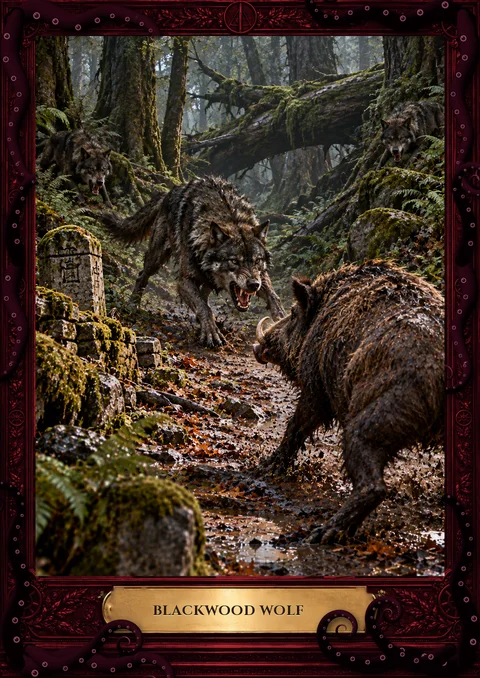
Wolf season and revenant season were entered on one line of the accounts, and the villages remembered the year the wolves came down together with the year the bell returned, which is to say the year the bell had to be rung again against the dead. Most of what the bounty men laid before the bailiffs was wolf, and honest wolf, paid for at two shillings a head in every hundred, as it had been for as long as anybody had kept a book.
Then one of the bounty men sat a fortnight at Harrowgate with all five books of the march open in front of him. Two bailiffs had written whatever word the bounty man gave them. Two had written wolf for everything. The fifth, at Mereton, wrote a description, because his predecessor had put the reason in the front of the book: a name is a guess, a description is a fact. Wolf, wolf, wolf, the Mereton pages ran, and then a line in a different hand: a thing out of the north carr, taken at the ninth bench, and four lines of what it looked like. There were twelve such lines in six hundred entries.
When the last book was read, the bounty man saw that the payments gathered by place and by year, and that in each place they came some few years after something there had been given up: a reed cut let go, a walk no longer kept, a holding abandoned. The bounty men tell it as a warning. It was never the wolves, they say, that were the difficulty.
What is known
The Crown pays two shillings a head, through the hundreds, for anything on its schedule, which is the list of beasts that earn a bounty. That schedule names wolves; it names four other things by names whose sense has since been lost; and it closes with a clause for such other noxious beasts as the bailiff shall judge. Under that clause most payments in the northern march are made, and they are made by bailiffs appointed for their honesty and their letters, who have no training whatever in what is laid before them. The Mereton bailiff alone writes down a description of what is brought in, and his single book is worth more than the other four together. Its twelve entries that are plainly not wolves gather in the north carrs.
The books record what came of a thing and not how often it was met. Nothing is entered for a kill left unclaimed, for a district that saw to its own trouble, or for whatever was only driven off. Wolves are met the length of the realm, and every manor keeps its dog handlers against them. The things the clause covers are rare, and in the march they are found where men have given up working the ground.