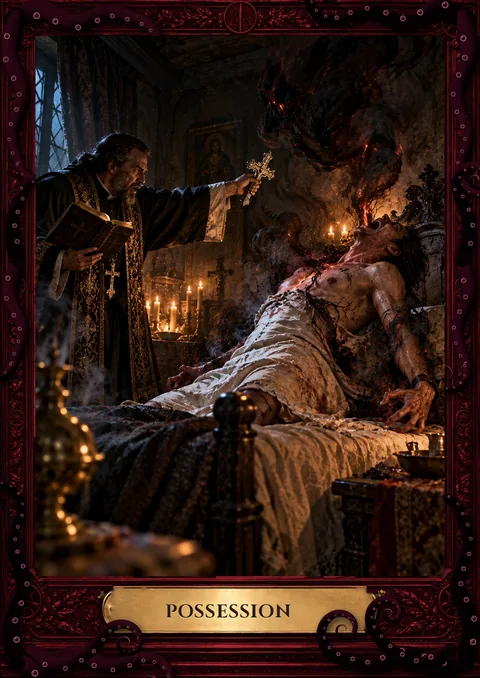
“They come in a day and a half, they cost the parish nothing, and they finish. Nobody who has not had to send for them is entitled to an opinion about what it costs, and everybody in the county has one.”
As the vestries of Kent tell it
Kent does not say possessed. It says that somebody has been in the ground, and by the time it says so the village has already made up its mind. At Otham, in 4613, somebody sent for the Grey Nails. The vicar never found out who. A party came within a day or so, as the order does, and listened to the village, and then it named a woman of seventy-one. The county tells the rest in a lower voice, because it has the shape of a handful of cases Kent would rather not discuss: she was old, and poor, and without connections, and she had been complained of for years about other things.
Her charm house was burnt, and the fire took a neighbouring byre and its fodder with it. She was cropped and turned out. The party went away as it always goes away, having charged nothing and written nothing down.
The deaths did not stop. For two months after the fire the parish went on burying. What that proves no one in Kent will say, and everyone in Kent knows what it looks like. The Brethren houses, which attend to troubled ground and not to people, say in private that the person is only the symptom and that the true complaint lies in the ground. The vestries, which are the parish bodies that do the sending, say nothing of the kind; and most of them, when the next call comes, send for the order again.
What is known
The phrase is some four hundred years old, the same in every parish of Kent, and it is said of a person and never of a place. No indictment in the realm employs the word possession, and no bench has ever consented to rule whether anyone is possessed. The hanging offence is a narrower thing, proved dealing with demons or spirits; hence what comes before a court is what the person is said to have done. Most parishes send for the Grey Nails, a sworn order of sixty to ninety laymen. A party of four to seven arrives within a day or so, and for one to four days it listens to the village. Then it names who is responsible, and proceeds against them. It charges nothing. It keeps no record.
The Brethren houses, which is to say the houses of the Black Lantern Brethren, work the other way about, attending to ground and not to people. A house is a fortnight in coming, and a full working may cost a vestry anything between eleven and twenty-six pounds. Perhaps six cases in forty years bear the shape of Otham: the person named was old, poor and without friends of any consequence, and the deaths went on afterwards. In the last decade four parishes that had called the Grey Nails went on to call a Brethren house within three years; and in three of those four the ground the house was called to was the ground in which the person the order had proceeded against lay buried.